

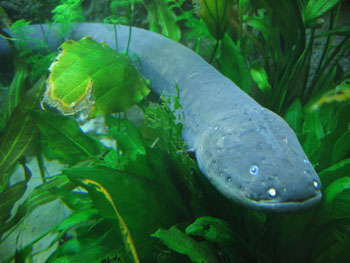
Predator defense/stunning prey: A few species of electric fish (i.e., strongly electric catfishes (Malapterurus), electric skates (Torpedo) and electric eels (Electrophorus)) produce extremely strong electrical discharges (hundreds of volts/cm) from their electric organs. Such strong discharges are effective both in repelling potential predators and in stunning potential prey.
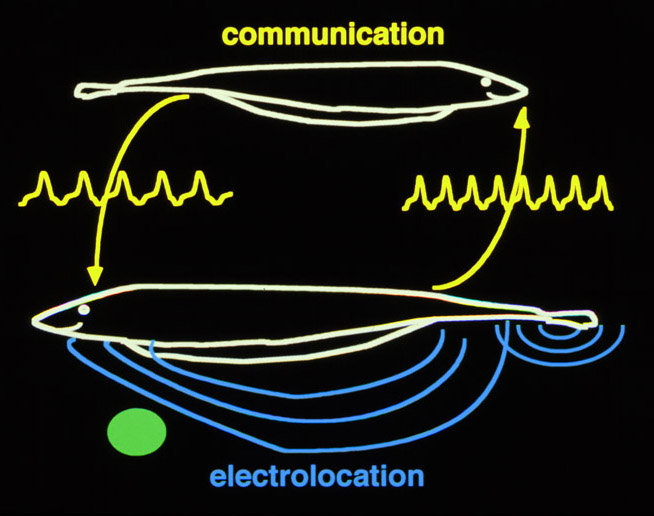
Electrocommunication: In addition to being able to detect their own discharges, the electroreceptors of electric fish are also able to detect how their own EOD interacts with the EODs of other fish. The EODs of fish of different species, different sexes, different social ranks, and even different individual fish are often distinctive. Thus, weakly electric fish are also able to use their EODs to communicate information about their species identity, sex, and social and reproductive status.
Electrolocation: Most species of electric fish produce electrical discharges that are far too weak to stun prey or predators (i.e., millivolts/cm). One function of weak electric organ discharges is electrolocation. The weak electric discharges emitted from the electric organ create an oscillating electric field around the fish, which is distorted by objects that differ from the water in electrical resistance or capacitance. Electroreceptors in the fish’s skin allow it to detect these distortions in the electric field and thereby obtain information about nearby objects or organisms. Electrolocation is particularly useful for weakly electric fish because many species are nocturnal and/or live in turbid water.
 Electric Fish Lab